Trump and Netanyahu badly weakened the Islamic Republic…and eliminated the people who might have been able to negotiate its surrender.
Unsurprisingly, U.S. President Donald Trump approaches diplomacy like a dealmaker. Before negotiating, he wants to know who has the authority to say yes, sign the agreement and make sure everyone delivers.
That is becoming the central problem in Iran.
The United States and Israel have achieved extraordinary military success against the Islamic Republic. Iran’s defenses have been penetrated, its military infrastructure battered and much of its senior leadership eliminated. Ali Khamenei, who served for decades as the ultimate arbiter among Iran’s competing clerical, civilian and military institutions, is gone.
Yet Iran continues fighting. Its Revolutionary Guard is attacking commercial shipping, threatening the Strait of Hormuz and firing missiles toward neighboring countries that host American forces. The ceasefire negotiated in June collapsed after Iran resumed attacks on vessels, prompting Trump to renew American strikes and reinstate the blockade of Iranian shipping.
The problem may be that there is no longer anyone in Iran capable of making a binding deal.
Iran still has officials who can attend negotiations. Its president can sign a document. Its foreign ministry can discuss sanctions and shipping. Its new supreme leader can lend nominal religious approval. But none appears to possess the combined legal, political, financial and military authority necessary to compel every part of the Iranian system to comply.
Power has increasingly shifted toward a hard-line wartime circle dominated by the Revolutionary Guard and the Supreme National Security Council. Mojtaba Khamenei formally sits atop the system, but reporting suggests his role is often to legitimize decisions made by military leaders rather than command them.
Trump may therefore be able to make an agreement with an Iranian official without making an agreement with Iran.
This may be an unintended consequence of American success. It may also have been part of Israel’s strategy all along.
Prime Minister Benjamin Netanyahu understood from the beginning, and perhaps better than anyone, that Iran was not merely a nuclear problem. It was the headquarters of the regional network that armed, financed and enabled Hamas, Hezbollah and other forces surrounding Israel. After October 7, Israel vowed to destroy the people and organizations responsible for the attack. Following that network upstream was always likely to lead eventually to Tehran.
Netanyahu had warned even before the present war that Israeli attacks could produce regime change. Israel may have understood that eliminating Khamenei and other central figures would make restoration of the old Islamic Republic impossible, even if it could not guarantee what replaced it.
Trump, meanwhile, appears to have believed that overwhelming pressure would produce a negotiating partner. Instead, the destruction of Iran’s governing hierarchy may have produced a country that is easier to bomb but harder to bind.
The Strait of Hormuz was also underestimated. Iran does not need to defeat the U.S. Navy or physically seal every mile of the waterway. It needs only to make shipping dangerous enough that insurers withdraw coverage, crews refuse assignments and commercial operators turn their vessels around. The United States must provide nearly complete security. Iran needs only an occasional successful attack.
Iran’s direct strikes on neighboring countries are equally revealing. Tehran traditionally preferred deniable violence conducted through proxies. Today, many of those proxies have been weakened or destroyed, and Iran is openly using missiles and drones against targets across the Gulf. That may reflect desperation, but it may also reflect the loss of experienced leaders capable of calibrating escalation.
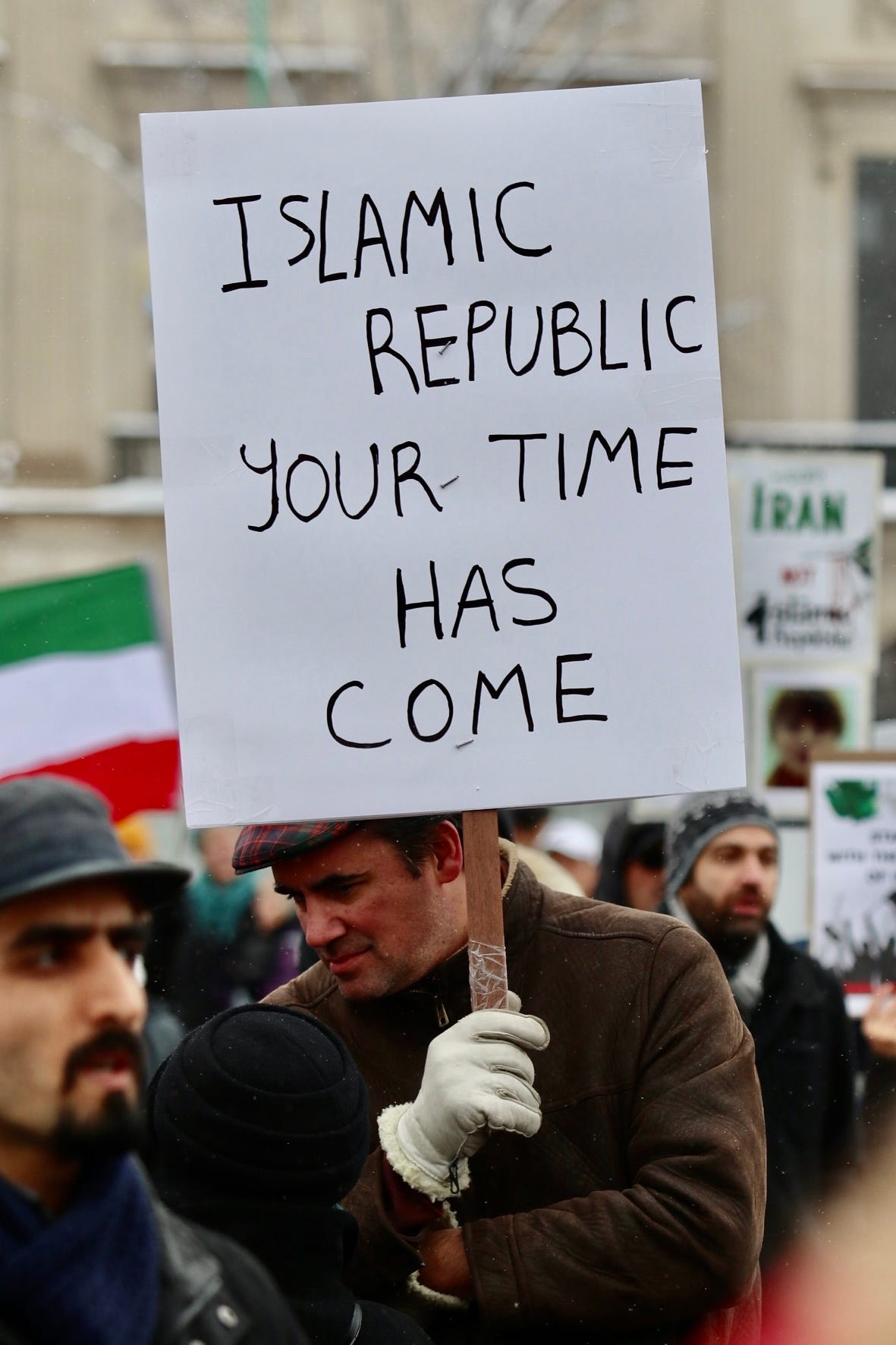
For the Iranian people, however, the regime’s eventual collapse could offer a historic opening.
Iranians have already demonstrated what they want. The “Woman, Life, Freedom” uprising that followed Mahsa Amini’s death in morality-police custody demanded personal dignity, political freedom and an end to clerical control in 2023. New protests erupted in early 2026 amid inflation and economic collapse. The government answered with what the United Nations described as brutal repression, with thousands reportedly killed.
The Islamic Republic has survived partly by controlling what its people can see and say. It dominates television and major news outlets, blocks independent information and shuts down the internet during periods of unrest. Researchers found that Iran centrally cut access to nearly all externally visible networks during its 2026 shutdowns. Authorities have also expanded online monitoring, facial recognition and other surveillance tools used against activists and women accused of violating compulsory dress rules.
That is not the behavior of a confident government. It is the behavior of a regime frightened of its own population.
Regime change will not guarantee democracy, and neither Trump nor Netanyahu can dictate Iran’s political future. That task ultimately belongs to Iranians. But the country possesses an educated population, a proud national identity, commercial talent, enormous natural resources and a civilization far older than the revolutionary government ruling it.
The Islamic Republic has spent nearly half a century exporting violence while imprisoning Iran’s potential. Its fall would not merely remove an enemy of Israel and the United States. It could return Iran to its own people.
Trump may not yet have anyone with whom he can make peace. But eventually, a new Iranian leadership may emerge with something the current regime has never possessed: authority derived not from fear, surveillance and religious coercion, but from the consent of the governed.
(Contributing writer, Brooke Bell)